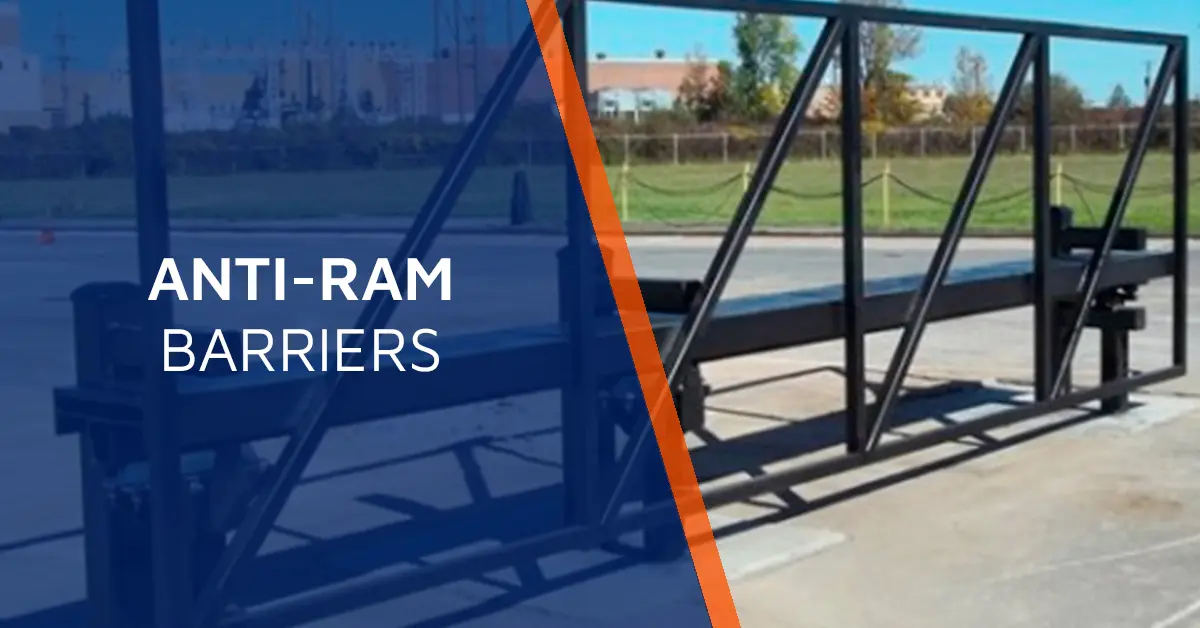
Anti-ram and vehicle mitigation barriers are essential components in protecting critical defense infrastructure from potential vehicle-based threats, such as vehicle-borne improvised explosive devices (VBIEDs), ramming attacks, or unauthorized vehicle access. These barriers are designed to stop or slow down a vehicle before it can cause damage to sensitive areas like military bases, defense installations, command centers, and high-security zones. Here’s how they provide protection:
1. Prevent Unauthorized Vehicle Access:
- Purpose: Anti-ram barriers are deployed around gates, entry points, or perimeter fencing to prevent unauthorized vehicles from entering restricted zones. These barriers are typically placed at entrances to critical defense infrastructure such as military bases, weapon storage facilities, or sensitive governmental buildings.
- How They Work: When an approaching vehicle strikes an anti-ram barrier, the barrier absorbs the impact and stops or redirects the vehicle. The barriers are designed to withstand high-speed impacts without allowing the vehicle to pass through. For example, bollards, steel beams, or reinforced gates are used to block the vehicle’s path.
- Materials Used: Reinforced steel, concrete, steel mesh, and high-strength composite materials are commonly used to build these barriers. These materials are selected for their ability to withstand high-energy impacts, effectively halting vehicles attempting to ram through security checkpoints.
2. Absorb and Dissipate Impact Energy:
- Purpose: Anti-ram barriers absorb and dissipate the kinetic energy of a vehicle to minimize damage to the infrastructure and reduce harm to personnel inside the facility.
- How They Work: The barriers are specifically engineered to stop a vehicle with minimal energy transfer to the infrastructure behind them. The materials used, such as sand-filled concrete barriers or shock-absorbing rubberized composites, help reduce the force exerted on the barrier while distributing the impact. This prevents the structure from being damaged and ensures the vehicle is immobilized.
- Design Features: The design and placement of anti-ram barriers often incorporate angled surfaces or flexible shock-absorbing elements that deflect or slow the vehicle, reducing the chances of a catastrophic breach. The barriers may also be designed to collapse or give way slightly upon impact to absorb the kinetic energy and reduce the vehicle’s momentum.
3. Vehicle-Borne Explosive Mitigation:
- Purpose: A key threat to critical infrastructure is the use of vehicles as platforms for explosives. Anti-ram barriers provide a preventive measure against VBIEDs by stopping vehicles before they reach vulnerable targets such as military command posts, munitions storage, or airfields.
- How They Work: When a vehicle approaches a vulnerable location, the anti-ram barrier stops it at a safe distance, preventing the vehicle from getting close enough to detonate any explosives it may be carrying. In some cases, vehicle checkpoints or vehicle blast barriers are combined with anti-ram systems to secure perimeters and control the flow of traffic around high-risk facilities.
- Design Features: Some anti-ram barriers are designed to absorb shock waves from explosions, reducing the risk of damage from a potential detonation. For instance, reinforced bollards or concrete walls may be installed around entrances to prevent ramming, while also absorbing and deflecting blast energy in the event of an attack.
4. Controlling Vehicle Speeds:
- Purpose: Anti-ram barriers also help control vehicle speeds in high-security zones and prevent vehicles from accelerating too quickly toward sensitive areas.
- How They Work: These barriers are often paired with other traffic control mechanisms, such as speed bumps, traffic islands, or traffic-calming measures, to slow down vehicles before they reach the barrier. The slower speed reduces the impact energy of the vehicle, making it easier for the barrier to stop the vehicle.
- Design Features: Anti-ram barriers may be coupled with spike strips, shaped curbs, or tapered barriers that force vehicles to slow down or change direction before coming into contact with the main barrier.
5. High-Speed Impact Resistance:
- Purpose: Many military and defense facilities are at risk from vehicles attempting high-speed ramming attacks, either by terrorists or adversaries aiming to breach the perimeter quickly.
- How They Work: Anti-ram barriers are tested and designed to stop vehicles traveling at high speeds, typically up to 50-60 mph (80-100 km/h), depending on the specific threat level. Barriers are constructed to withstand high-energy impacts without failing, ensuring that a high-speed vehicle is stopped or slowed to a complete stop.
- Materials Used: Reinforced concrete, high-tensile steel, and ballistic materials are used in these barriers, as they offer the strength required to resist high-speed impacts and prevent breach. Specialized steel bollards and crash-rated gates are examples of such barriers.
6. Customizable Solutions for Specific Threats:
- Purpose: Anti-ram barriers are not one-size-fits-all; they are customizable depending on the specific threat level, facility requirements, and geographical considerations.
- How They Work: For example, areas with a higher risk of vehicle bombings might use explosive-resistant barriers, while high-traffic military bases might require more mobile or retractable barriers that can be lowered or raised quickly. The design can vary based on the need to balance security and accessibility.
- Design Features: Retractable bollards, removable barriers, and gate systems provide flexibility in controlling access during normal operations, while still being effective in preventing unauthorized vehicle access during a threat scenario.
7. Enhanced Security Layering:
- Purpose: Anti-ram barriers are typically just one part of a larger layered defense system at critical infrastructure sites. These systems integrate barriers with other physical security measures, such as surveillance cameras, motion detectors, security gates, and armed personnel to create a comprehensive defense against vehicle threats.
- How They Work: Barriers provide the first line of defense, while other security measures such as security personnel and vehicle screening can identify suspicious vehicles early on. This multi-layered security approach helps prevent potential threats before they escalate.
- Design Features: Barriers are often complemented with fencing, access control points, and security checkpoints that work together to prevent vehicles from reaching critical infrastructure.
Conclusion:
Anti-ram and vehicle mitigation barriers are integral to protecting critical defense infrastructure by preventing unauthorized vehicle access, absorbing impact energy, and mitigating the potential damage from vehicle-borne threats like explosives. They are constructed with materials like reinforced steel, concrete, and composites to withstand high-speed impacts and prevent breaches. By integrating these barriers with other security systems, defense facilities can maintain a robust defense against vehicle-based attacks while ensuring the safety of personnel, equipment, and sensitive infrastructure.
Hashtags
#AntiRamBarriers #VehicleMitigation #CriticalInfrastructureProtection #DefenseSecurity #BarrierTechnology #MilitaryDefense #SecuredFacilities #InfrastructureProtection #PerimeterDefense #MilitaryFortification #VehicleStopper #RAMProtection #BarrierEngineering #VehicleBarrierTech #VehicleDefense #ThreatMitigation #TerrorismPrevention #HighSecurityZones #AccessControlTech #DefenseSolutions #SafetyFirst #SecurityMatters #InfrastructureResilience