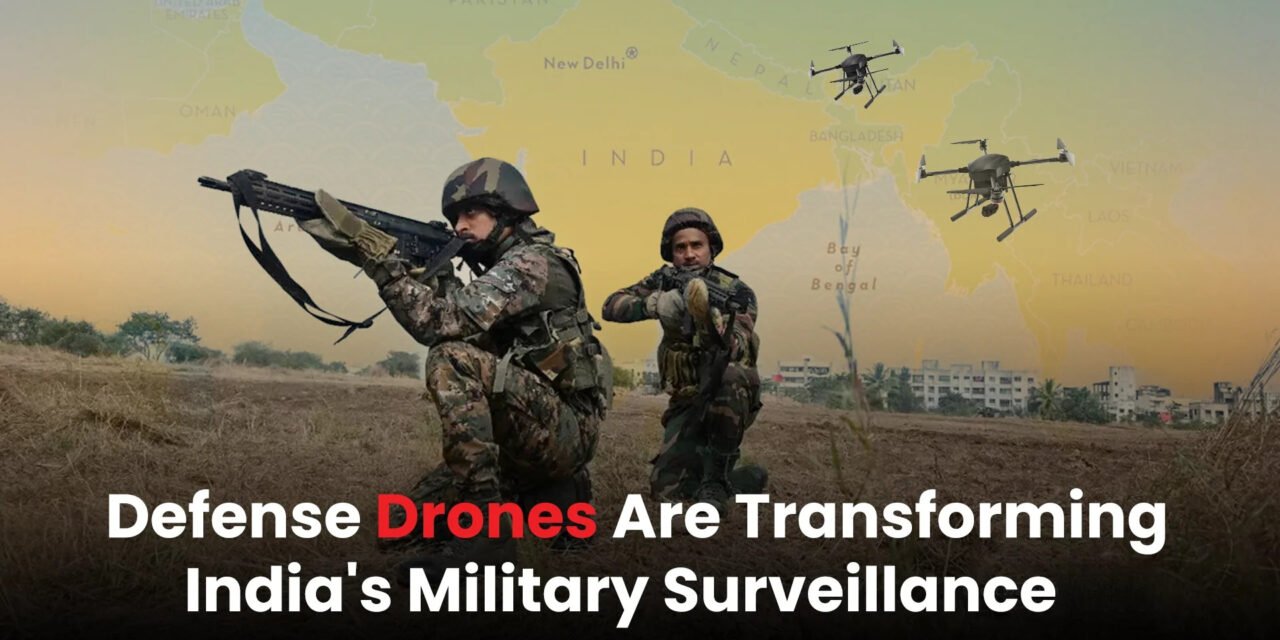
Surveillance and reconnaissance drones are indispensable tools in modern defense strategies, providing real-time intelligence, enhancing situational awareness, and reducing risks to human personnel. Their ability to operate in diverse environments, gather high-quality data, and remain in the field for extended periods makes them pivotal for military operations across all domains—land, air, sea, and space.
1. Key Roles of Surveillance and Reconnaissance Drones
a. Intelligence, Surveillance, and Reconnaissance (ISR)
- Real-Time Data Gathering:
- Drones collect imagery, video, and signals intelligence (SIGINT) from the battlefield, providing commanders with actionable information.
- Example: MQ-9 Reaper drones capturing high-resolution video of enemy movements.
- Monitoring Hostile Activity:
- Detect and track enemy positions, vehicles, and troop movements.
- Example: RQ-4 Global Hawk drones monitor large areas for strategic intelligence.
b. Target Acquisition and Battle Damage Assessment (BDA)
- Target Identification:
- Drones confirm the identity and location of potential targets before strikes.
- Example: Ensuring precision in missile strikes to minimize collateral damage.
- Post-Strike Analysis:
- Assess the effectiveness of an attack by analyzing the damage and remaining threats.
c. Maritime Surveillance
- Role:
- Monitor maritime zones for illegal activities, enemy ships, and submarine movements.
- Example: MQ-4C Triton drones for monitoring naval fleets and detecting potential threats.
d. Border Security and Counter-Insurgency
- Role:
- Patrol borders to detect unauthorized crossings or smuggling operations.
- Example: Drones deployed for surveillance in counter-terrorism operations to track insurgent activities.
e. Persistent Surveillance
- Role:
- Provide long-term surveillance over a region to detect patterns or anticipate enemy actions.
- Example: Drones loitering over conflict zones for continuous monitoring.
2. Advantages of Surveillance and Reconnaissance Drones
a. Real-Time Situational Awareness
- Deliver live feeds of battlefield conditions, enabling commanders to make informed decisions quickly.
b. Risk Reduction
- Drones perform dangerous reconnaissance missions without risking human lives.
c. Long Endurance and Operational Range
- Many drones can operate for hours or even days without refueling, covering vast areas.
- Example: RQ-4 Global Hawk with a flight endurance of over 30 hours.
d. Stealth and Low Detectability
- Small size and quiet operation allow drones to evade detection, especially in high-threat environments.
e. Cost-Effectiveness
- Drones are more economical than deploying manned aircraft or ground reconnaissance teams.
f. Adaptability Across Environments
- Operate effectively in deserts, forests, mountains, urban areas, and maritime zones.
3. Types of Surveillance and Reconnaissance Drones
a. Strategic Drones
- Purpose:
- Long-range, high-altitude drones for strategic intelligence gathering.
- Examples:
- RQ-4 Global Hawk: High-altitude, long-endurance drone for broad area surveillance.
b. Tactical Drones
- Purpose:
- Smaller, short-range drones for battlefield reconnaissance.
- Examples:
- RQ-11 Raven: A lightweight, portable drone used by infantry for real-time situational awareness.
c. Micro and Nano Drones
- Purpose:
- Small drones for urban surveillance and close-quarters intelligence gathering.
- Examples:
- Black Hornet Nano: A palm-sized drone used for covert surveillance.
d. Maritime Drones
- Purpose:
- Monitor naval activities and support anti-submarine warfare.
- Examples:
- MQ-4C Triton: Designed for persistent maritime surveillance.
e. Swarm Drones
- Purpose:
- Coordinated groups of drones for large-scale reconnaissance or electronic warfare.
- Examples:
- DARPA’s OFFSET program developing drone swarming capabilities.
4. Technologies Enhancing Drone Capabilities
a. Artificial Intelligence (AI)
- Role:
- Enables autonomous navigation, threat detection, and target classification.
- Example: AI-driven analysis of drone imagery to identify threats in real time.
b. Advanced Sensors
- Types:
- Electro-optical/infrared (EO/IR) cameras for day-and-night surveillance.
- Synthetic Aperture Radar (SAR) for high-resolution imaging through clouds or smoke.
- LIDAR for 3D mapping and terrain analysis.
- Example:
- Multi-sensor payloads on MQ-9 Reaper drones.
c. Secure Communication Links
- Role:
- Encrypted data links ensure secure transmission of reconnaissance data.
- Example: NATO’s Link 16 communication standard.
d. Stealth Technology
- Role:
- Reduces radar cross-section and thermal signatures to evade detection.
- Example: X-47B stealth UAV.
e. Autonomous Operation
- Role:
- AI-driven drones can operate independently, reducing reliance on human operators.
- Example: Loyal Wingman drones working alongside manned aircraft.
5. Challenges and Solutions
a. Vulnerability to Electronic Warfare
- Challenge:
- Drones may be jammed or spoofed by enemy electronic warfare systems.
- Solution:
- Use anti-jamming technologies and AI for autonomous operation in contested environments.
b. Limited Endurance for Smaller Drones
- Challenge:
- Tactical drones may have short flight durations.
- Solution:
- Develop lightweight, high-capacity batteries and efficient propulsion systems.
c. Data Overload
- Challenge:
- Processing vast amounts of data collected by drones.
- Solution:
- Use AI and machine learning for real-time data analysis and prioritization.
d. Regulatory and Ethical Concerns
- Challenge:
- Issues surrounding privacy, sovereignty, and the use of lethal drones.
- Solution:
- Establish clear rules of engagement and compliance with international laws.
6. Strategic Impact of Surveillance and Reconnaissance Drones
a. Force Multiplication
- Enable smaller forces to achieve greater situational awareness and combat effectiveness.
b. Asymmetric Warfare
- Provide a significant advantage against adversaries with limited technological capabilities.
c. Decision-Making Superiority
- Accelerate and improve the accuracy of decisions with real-time intelligence.
d. Persistent Surveillance
- Maintain continuous monitoring of key areas, ensuring no gaps in intelligence coverage.
e. Enhanced Coalition Operations
- Facilitate data sharing and coordination among allied forces.
7. Real-World Applications
- Operation Inherent Resolve:
- Drones provided ISR support in the fight against ISIS, identifying targets and monitoring enemy movements.
- Maritime Security:
- Drones patrol key waterways to prevent piracy and secure shipping lanes.
- Border Security:
- Deployed to monitor borders for illegal crossings and smuggling activities.
Conclusion
Surveillance and reconnaissance drones are vital assets in modern defense strategies, offering unparalleled intelligence-gathering capabilities and operational flexibility. With advancements in AI, sensors, and autonomous systems, these drones are set to play an even greater role in enhancing situational awareness, supporting decision-making, and ensuring mission success in diverse and challenging environments.
Hashtags
#MilitaryDrones #SurveillanceDrones #ReconnaissanceDrones #DefenseUAVs #ModernDroneTech #AerialSurveillance #ISRTechnology #DroneReconnaissance #TacticalSurveillance #IntelligenceGathering #NextGenDrones #SmartDroneTech #AIInDrones #AdvancedISRTech #DroneInnovation #DroneInWarfare