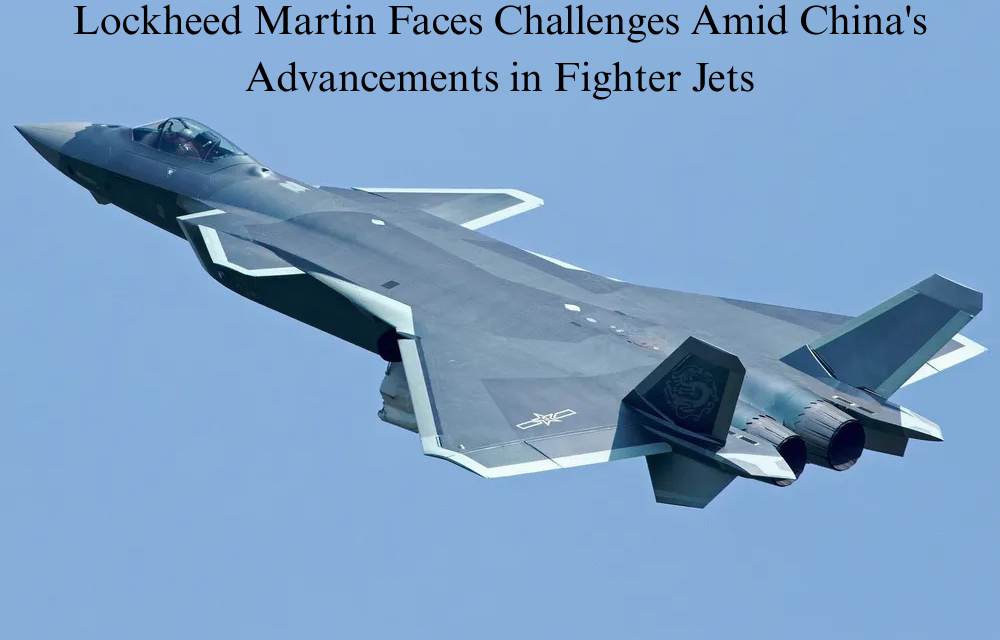
Lockheed Martin, a global leader in defense and aerospace, is facing increasing competition as China rapidly advances its fighter jet capabilities, particularly with its fifth-generation aircraft like the J-20 Mighty Dragon and the development of the next-generation J-31 stealth fighter. These advancements are narrowing the technological gap, challenging Lockheed Martin’s dominance in the market with its flagship fighters, the F-35 Lightning II and F-22 Raptor.
China’s progress in stealth technology, avionics, and long-range air-to-air missile systems has raised concerns among defense analysts, especially as Beijing positions itself as a competitor in the global defense export market. The affordability and regional appeal of Chinese aircraft pose a potential threat to Lockheed Martin’s market share, particularly in Asia and the Middle East, where nations are exploring cost-effective alternatives to Western fighters.
Lockheed Martin is responding by enhancing the capabilities of its existing platforms, offering upgrades such as improved stealth features, AI-driven systems, and advanced weapons integration. Additionally, the company is focusing on strengthening its international partnerships and expanding production to meet the growing global demand for advanced fighters.
The intensifying competition underscores the shifting dynamics of the global defense industry, with China’s advancements compelling established players like Lockheed Martin to innovate faster and maintain their technological edge in an increasingly contested market.