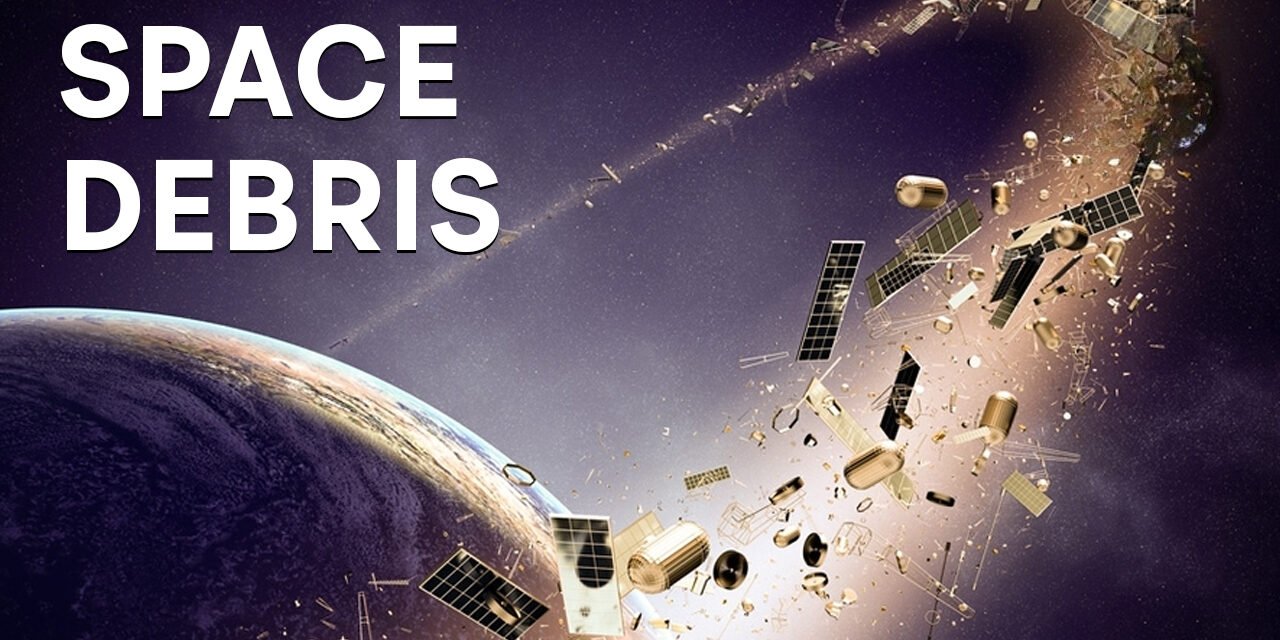
Space debris, or orbital debris, poses significant risks to satellite operations and other space activities. This debris consists of defunct satellites, spent rocket stages, and fragments resulting from collisions or disintegration events. Here’s how it impacts satellite operations and the measures taken to mitigate it:
Impact of Space Debris on Satellite Operations
1. Collision Risk
- Even small pieces of debris, traveling at speeds of up to 28,000 km/h (17,500 mph), can cause severe damage or complete destruction of a satellite.
- Collisions can generate more debris, creating a cascading effect known as the Kessler Syndrome, where debris collisions exponentially increase the debris population.
2. Threat to Human Life
- Space debris poses risks to crewed missions, such as those on the International Space Station (ISS), requiring regular monitoring and avoidance maneuvers.
3. Interference with Operations
- Satellites may need to perform evasive maneuvers to avoid collisions, consuming fuel and reducing their operational lifespan.
- Critical communication, navigation, and Earth observation services can be disrupted by damage or loss of satellites.
4. Cost Implications
- Repairing, replacing, or fortifying satellites against debris increases mission costs.
- Insuring satellites against debris-related incidents adds to operational expenses.
Measures to Mitigate Space Debris
1. Active Collision Avoidance
- Tracking and Monitoring:
- Space debris is tracked using ground-based radars and telescopes, as well as space-based sensors.
- Organizations like the U.S. Space Surveillance Network (SSN) and the European Space Operations Centre (ESOC) maintain detailed catalogs of debris.
- Evasive Maneuvers:
- Satellites are programmed to perform collision avoidance maneuvers when potential threats are identified.
- Automated systems and AI are increasingly used to predict and respond to collision risks.
2. End-of-Life Management
- Deorbiting Satellites:
- Satellites are moved to lower orbits at the end of their operational life to burn up during reentry.
- Compliance with international guidelines recommends deorbiting within 25 years of mission completion.
- Graveyard Orbits:
- Satellites in higher orbits (e.g., geostationary orbit) are moved to “graveyard orbits” where they pose minimal collision risk.
3. Space Debris Removal Technologies
- Active Debris Removal (ADR):
- Technologies are being developed to capture and remove debris, including:
- Robotic arms and nets to capture debris.
- Harpoons to target and retrieve large debris.
- Laser ablation systems to nudge small debris into decay orbits.
- Technologies are being developed to capture and remove debris, including:
- Demonstration Missions:
- Projects like ClearSpace-1 (ESA) and RemoveDEBRIS (UK-led) are testing debris removal technologies in orbit.
4. Designing for Sustainability
- Shielding:
- Satellites and space stations are equipped with shielding (e.g., Whipple shields) to protect against small debris impacts.
- Disposal Mechanisms:
- Satellites are designed with integrated deorbit systems, such as drag sails, propulsion systems, or tethers.
- Material Selection:
- Using materials that reduce the risk of fragmentation upon impact or collision.
5. International Guidelines and Regulations
- UN Guidelines:
- The United Nations Office for Outer Space Affairs (UNOOSA) has developed guidelines to minimize space debris creation.
- Space Debris Mitigation Standards:
- Organizations like the Inter-Agency Space Debris Coordination Committee (IADC) and ISO have created standards for debris mitigation.
- National Policies:
- Space agencies and governments enforce debris mitigation measures as part of satellite licensing and launch approvals.
6. Coordinated Space Traffic Management
- Global Collaboration:
- Space-faring nations share data on debris tracking and collaborate on collision avoidance.
- Space Traffic Management (STM):
- Efforts are underway to establish a global framework for managing satellite operations and minimizing debris risks.
Future Trends in Space Debris Mitigation
- Advanced Tracking and Prediction:
- AI and machine learning are improving the accuracy of debris monitoring and collision prediction.
- Sustainable Satellite Constellations:
- Operators of mega-constellations like SpaceX’s Starlink and OneWeb are incorporating advanced deorbiting and collision avoidance technologies.
- Legislative Initiatives:
- Growing pressure for binding international regulations to address space debris issues.
- Increased Debris Removal Efforts:
- Funding and development of large-scale debris removal missions to clean up critical orbits.
Space debris is a growing challenge that threatens satellite operations and the sustainability of space activities. Mitigating these risks requires a combination of technological innovation, responsible operational practices, international collaboration, and regulatory measures. As the use of space continues to expand, proactive efforts to manage and reduce debris will be essential for preserving the long-term usability of Earth’s orbits.