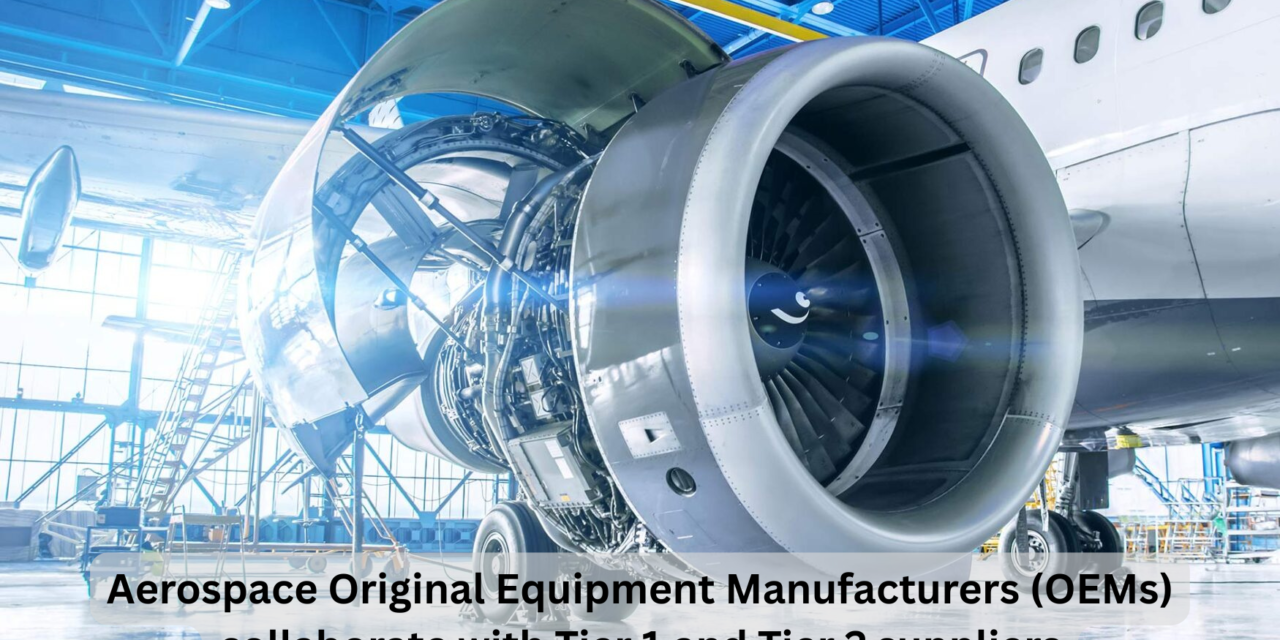
Collaboration between aerospace Original Equipment Manufacturers (OEMs) and their Tier 1 and Tier 2 suppliers is essential to the production of aircraft and aerospace systems. This collaboration is built on a complex, multi-tiered supply chain that ensures the seamless integration of components and systems. Here’s a detailed overview of how aerospace OEMs collaborate with their Tier 1 and Tier 2 suppliers:
1. Understanding the Supply Chain Structures
- OEMs (Original Equipment Manufacturers):
- Companies like Boeing, Airbus, Lockheed Martin, and Embraer oversee the design, integration, and assembly of complete aircraft or aerospace systems.
- They act as the final integrators and set the overall specifications, timelines, and quality standards.
- Tier 1 Suppliers:
- Provide complete subsystems or large assemblies such as engines, avionics, landing gear, or wing structures.
- Examples: Rolls-Royce (engines), Collins Aerospace (avionics), Spirit AeroSystems (aerostructures).
- Tier 2 Suppliers:
- Supply components or assemblies to Tier 1 suppliers, such as brackets, wiring harnesses, or composite materials.
- These companies may specialize in specific processes like machining, forging, or composite fabrication.
2. Collaborative Design and Development
- Joint Development:
- OEMs often work closely with Tier 1 suppliers during the design phase to ensure that subsystems meet the overall aircraft specifications.
- Co-development efforts may involve shared digital tools, such as CAD models or digital twins, to ensure compatibility and performance.
- Example: GE Aviation collaborates with Boeing on engine designs tailored for the 737 MAX.
- Early Supplier Involvement (ESI):
- Tier 1 suppliers are brought into the design process early to leverage their expertise in specific subsystems, such as engines or avionics, reducing risks and development time.
- Innovation Sharing:
- Suppliers often contribute advanced technologies or materials, such as lightweight composites or additive manufacturing techniques.
3. Contractual Agreements and Long-Term Partnerships
- Risk-Sharing Partnerships:
- Tier 1 suppliers often enter into risk-sharing agreements with OEMs, investing in R&D and production in exchange for long-term contracts.
- Example: Tier 1 suppliers like Safran or Pratt & Whitney co-invest in aircraft programs with OEMs.
- Tier 2 Sourcing:
- Tier 1 suppliers are responsible for managing Tier 2 suppliers, ensuring components meet specifications and timelines.
4. Quality Assurance and Standards Compliance
- Certification Standards:
- OEMs establish stringent quality requirements, such as AS9100 or ISO 9001 standards, which Tier 1 and Tier 2 suppliers must follow.
- Inspection and Testing:
- Collaboration involves extensive testing of components and subsystems, with Tier 1 suppliers often conducting initial quality checks before delivery to the OEM.
- Example: Rolls-Royce conducts rigorous engine testing before shipping to Boeing or Airbus.
- Traceability:
- Aerospace supply chains require detailed traceability of materials and components to meet regulatory and safety requirements.
5. Supply Chain Coordination
- Production Planning:
- OEMs and Tier 1 suppliers work together to create detailed production schedules that align with aircraft assembly timelines.
- Just-in-Time (JIT) Delivery:
- Many OEMs rely on JIT inventory systems, requiring Tier 1 and Tier 2 suppliers to deliver components precisely when needed to avoid delays and storage costs.
- Logistics Integration:
- Close collaboration ensures efficient logistics and minimizes bottlenecks in the supply chain.
6. Technology Integration
- Digital Collaboration:
- OEMs and suppliers use shared digital platforms, such as PLM (Product Lifecycle Management) software, to collaborate on designs, track progress, and manage changes in real time.
- Standardized Interfaces:
- OEMs often define interfaces for systems and components, ensuring that parts from various suppliers integrate seamlessly.
- Advanced Manufacturing:
- Suppliers adopt cutting-edge technologies like additive manufacturing, automation, and robotics to meet OEM requirements.
7. Risk Management
- Supply Chain Resilience:
- OEMs collaborate with Tier 1 suppliers to identify risks in the supply chain and develop contingency plans for disruptions, such as alternate sourcing or stockpiling critical materials.
- Compliance with Export Regulations:
- Both OEMs and suppliers must adhere to export controls like ITAR (International Traffic in Arms Regulations) and EAR (Export Administration Regulations).
8. Sustainability Goals
- Environmental Standards:
- OEMs encourage suppliers to adopt sustainable practices, such as reducing emissions, waste, and energy consumption.
- Example: Airbus collaborates with suppliers to integrate sustainable materials and production methods in the A350 XWB program.
- Shared Goals:
- OEMs and suppliers align on industry-wide initiatives, such as the development of Sustainable Aviation Fuels (SAFs) or zero-emission technologies.
9. Intellectual Property (IP) and Data Security
- IP Sharing:
- Collaborative design requires clear agreements on IP ownership and usage between OEMs and suppliers.
- Data Security:
- OEMs and suppliers implement robust cybersecurity measures to protect sensitive design data and operational information.
10. Performance Monitoring and Feedback
- Supplier Audits:
- OEMs regularly audit Tier 1 and Tier 2 suppliers to ensure compliance with quality and performance standards.
- Feedback Loops:
- Real-time performance data and feedback are shared between OEMs and suppliers to continuously improve processes.
- Metrics and KPIs:
- OEMs establish Key Performance Indicators (KPIs) to monitor supplier efficiency, quality, and on-time delivery.
Challenges in Collaboration
- Complexity:
- Managing relationships and ensuring alignment across multiple suppliers and tiers is challenging.
- Cost Pressures:
- OEMs demand cost reductions while maintaining high-quality standards.
- Geopolitical Issues:
- Export controls, tariffs, and trade restrictions can complicate supplier relationships.
- Technological Gaps:
- Tier 2 suppliers may lack the technological capabilities of Tier 1 suppliers, impacting the overall supply chain.
Conclusion
Collaboration between aerospace OEMs, Tier 1, and Tier 2 suppliers is essential for the efficient and reliable production of aircraft. By fostering partnerships, leveraging shared technologies, and aligning on quality and sustainability goals, OEMs and their suppliers create a robust ecosystem that meets the demands of the highly regulated and competitive aerospace industry. Effective coordination and innovation across these tiers are key to the industry’s continued success.
Hashtags
#AerospaceCollaboration #OEMPartnerships #Tier1Suppliers #Tier2Suppliers #AerospaceSupplyChain #IntegratedSupplyChain #SupplyChainPartnerships #AerospaceLogistics #SupplyChainOptimization #StrategicSourcing #CollaborativeInnovation #AerospaceR&D #TechPartnerships #JointDevelopment #FutureAerospaceTech