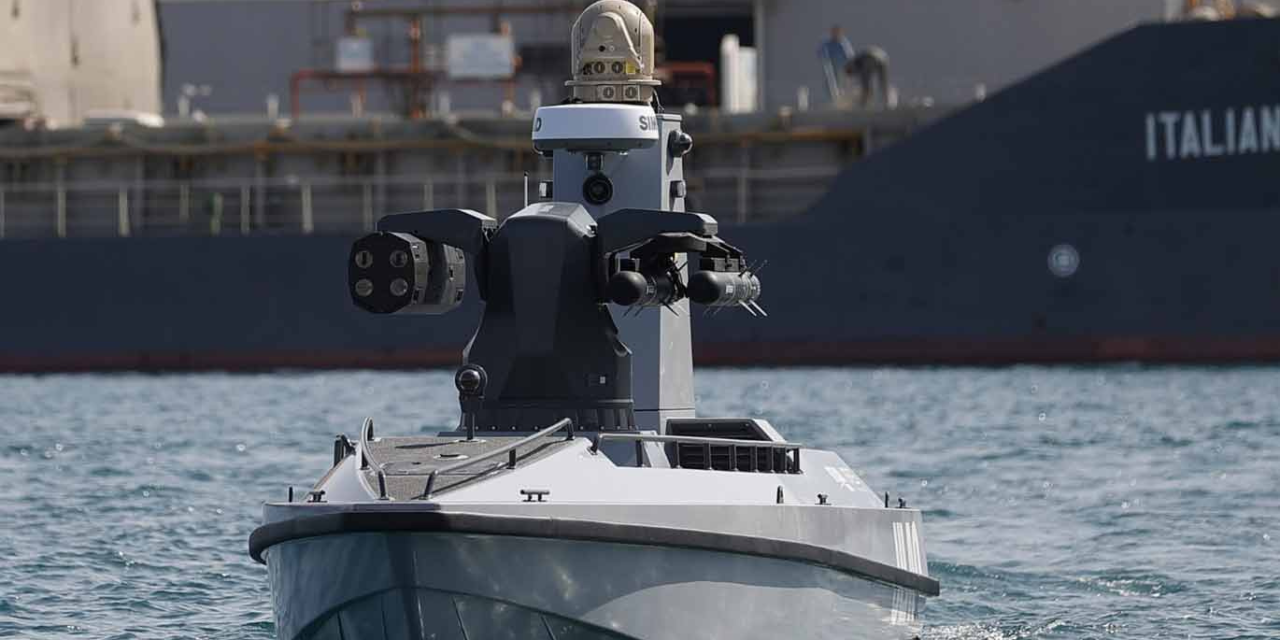
Naval drones and Unmanned Surface Vehicles (USVs) are transforming maritime surveillance by enhancing situational awareness, reducing operational risks, and enabling cost-effective, persistent monitoring of maritime domains. These platforms play versatile roles in modern naval operations, providing intelligence, reconnaissance, and threat detection capabilities in contested and high-risk environments. Here’s an in-depth look at their roles in maritime surveillance:
1. Intelligence, Surveillance, and Reconnaissance (ISR)
- Role: Naval drones and USVs provide real-time monitoring and data collection across vast maritime areas.
- Applications:
- Detect and track surface vessels, submarines, and potential threats.
- Gather imagery, video, and sensor data for intelligence analysis.
- Examples:
- MQ-4C Triton: A high-altitude, long-endurance drone for wide-area ISR.
- Sea Hunter: An autonomous USV designed for anti-submarine warfare (ASW) and ISR.
2. Maritime Domain Awareness (MDA)
- Role: Enhance situational awareness of maritime zones, including exclusive economic zones (EEZs), sea lanes, and coastal waters.
- Applications:
- Monitor illegal activities such as smuggling, piracy, and unregulated fishing.
- Track and identify vessels using Automatic Identification System (AIS) integration.
- Examples:
- ScanEagle: A small, long-endurance drone used for persistent MDA.
3. Anti-Submarine Warfare (ASW)
- Role: Support detection and tracking of submarines, a critical aspect of naval surveillance.
- Applications:
- Use sonar-equipped USVs or unmanned underwater vehicles (UUVs) for underwater surveillance.
- Deploy sonobuoys and acoustic sensors for extended detection capabilities.
- Examples:
- Knifefish UUV: Designed for detecting and classifying undersea threats like mines and submarines.
4. Persistent Surveillance and Patrolling
- Role: Conduct continuous, unmanned surveillance over extended periods, reducing the need for human-operated platforms.
- Applications:
- Patrol critical chokepoints, straits, and shipping lanes.
- Provide early warning of potential incursions or hostile activities.
- Examples:
- Protector USV: An armed USV capable of patrolling and surveillance missions.
5. Cost-Effective Operations
- Role: Reduce operational costs compared to manned platforms like ships and aircraft.
- Advantages:
- Operate autonomously or semi-autonomously with minimal crew involvement.
- Require less maintenance and fuel compared to traditional naval vessels.
- Examples:
- C-Enduro USV: A solar-powered, low-cost USV for long-duration missions.
6. Rapid Response and Flexibility
- Role: Provide quick deployment options for emergent surveillance needs.
- Applications:
- Respond to maritime crises such as oil spills, natural disasters, or vessel distress signals.
- Deploy modular payloads tailored to specific missions, such as ISR, ASW, or electronic warfare.
- Examples:
- CAMCOPTER S-100: A rotary-wing drone capable of operating from ships for rapid response missions.
7. Electronic Surveillance
- Role: Conduct electronic intelligence (ELINT) and signals intelligence (SIGINT) to monitor adversary communications and radar emissions.
- Applications:
- Detect and analyze electromagnetic spectrum activity.
- Monitor enemy vessel movements and sensor systems.
- Examples:
- MQ-9B SeaGuardian: Equipped with advanced electronic surveillance capabilities.
8. Integration with Multi-Domain Operations
- Role: Act as force multipliers by integrating with manned and unmanned platforms across air, surface, and underwater domains.
- Applications:
- Provide real-time data to command centers, enhancing decision-making.
- Collaborate with manned aircraft, ships, and submarines for coordinated surveillance.
- Examples:
- Sea Hunter integrated with manned ASW assets for enhanced operational coverage.
9. Monitoring and Protecting Critical Infrastructure
- Role: Secure maritime assets such as ports, oil rigs, and undersea communication cables.
- Applications:
- Detect unauthorized access or sabotage attempts.
- Monitor underwater activities near critical infrastructure.
- Examples:
- Wave Glider: A wave- and solar-powered USV used for persistent infrastructure monitoring.
10. Environmental Monitoring
- Role: Support oceanographic and environmental research to enhance maritime safety.
- Applications:
- Monitor sea conditions, weather patterns, and marine ecosystems.
- Detect pollutants and track oil spills.
- Examples:
- DriX USV: A USV designed for hydrographic and environmental data collection.
Challenges and Limitations
A. Communication and Navigation
- Limited by underwater communication constraints and GPS-denied environments.
B. Vulnerability to Cyber Attacks
- Unmanned systems are susceptible to hacking, jamming, or spoofing.
C. Operational Autonomy
- Reliance on AI for decision-making in complex scenarios poses ethical and operational challenges.
D. Adverse Weather Conditions
- High seas, strong winds, and storms can limit the effectiveness of USVs and drones.