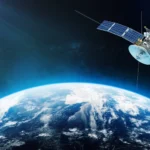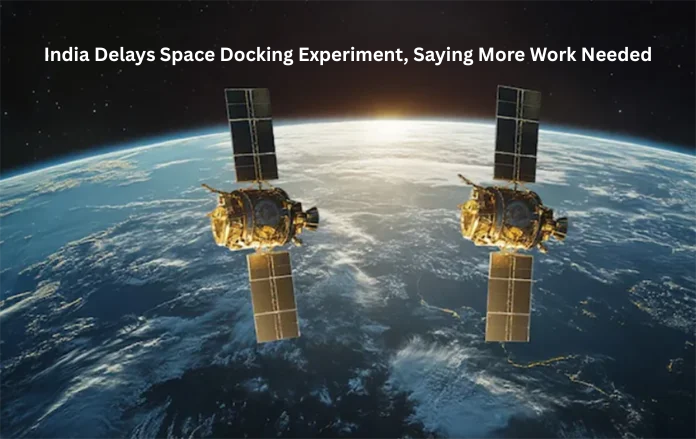
The Indian Space Research Organisation (ISRO) has announced a delay in its much-anticipated space docking experiment, emphasizing the need for additional technical refinements and testing before proceeding. The mission, which was initially slated for 2024, aims to demonstrate India’s capability to autonomously dock two spacecraft in orbit, a critical milestone for future endeavors such as space stations and long-duration crewed missions.
ISRO officials have indicated that while significant progress has been made, certain subsystems and technologies require further validation to ensure mission success. The experiment involves the use of two small satellites equipped with cutting-edge sensors, guidance systems, and autonomous navigation technology, designed to perform the complex maneuvers required for docking in microgravity.
This delay reflects the inherent challenges of mastering docking technology, which only a handful of countries, including the United States, Russia, and China, have achieved. The capability is essential for advancing India’s space exploration goals, including the Gaganyaan human spaceflight mission, potential lunar orbital stations, and deep-space exploration missions.
Despite the setback, ISRO remains optimistic about the experiment’s success and its implications for India’s space ambitions. By prioritizing rigorous testing and risk mitigation, the organization aims to ensure the reliability and precision of its docking systems. The mission is now expected to be rescheduled in the near future, underscoring ISRO’s commitment to technological excellence and innovation in space exploration.