Fuel systems in aircraft are critical to ensuring operational efficiency and safety by providing a reliable supply of fuel to the engines, optimizing fuel usage, and maintaining stability during flight. These systems are designed to handle the complexities of modern aviation, where safety, efficiency, and performance are paramount.
Contribution to Operational Efficiency
1. Optimized Fuel Delivery
- Role: The fuel system ensures a consistent and precise flow of fuel to the engines at all stages of flight.
- Impact:
- Reduces fuel wastage by delivering only the required amount.
- Enhances engine efficiency and performance.
2. Fuel Tank Design and Placement
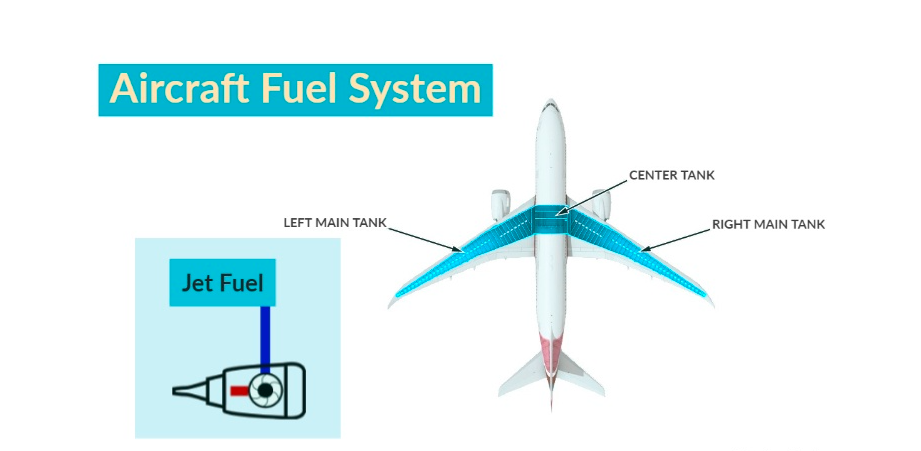
- Role: Fuel tanks are strategically placed (e.g., in the wings) to optimize weight distribution and reduce drag.
- Impact:
- Improves aerodynamic efficiency, reducing fuel consumption.
- Balances the aircraft’s center of gravity for stable flight.
3. Fuel Management Systems
- Role: Modern aircraft use automated fuel management systems to monitor and control fuel distribution.
- Impact:
- Ensures fuel is used from tanks in a sequence that maintains balance.
- Provides real-time data on fuel levels for efficient flight planning.
4. Fuel Efficiency Enhancements
- Role: Advanced materials and designs reduce the weight of fuel tanks and components.
- Impact:
- Minimizes overall aircraft weight, improving fuel efficiency.
- Allows for longer range or increased payload capacity.
Contribution to Safety
1. Redundancy and Reliability
- Role: Aircraft fuel systems are designed with multiple pumps, tanks, and valves to ensure continuous operation even if a component fails.
- Impact:
- Prevents engine starvation by maintaining fuel flow in emergencies.
- Enhances system reliability, reducing risks.
2. Fuel Monitoring and Alarms
- Role: Sensors provide real-time data on fuel quantity, flow rate, and temperature.
- Impact:
- Alerts pilots to potential issues such as leaks or low fuel levels.
- Ensures timely corrective actions to avoid in-flight complications.
3. Fuel Jettison Systems
- Role: Large aircraft are equipped with fuel dump systems to reduce weight in emergencies (e.g., before an unscheduled landing).
- Impact:
- Enhances safety by lowering landing weight to within safe limits.
- Reduces the risk of structural damage during emergency landings.
4. Cross-Feed Capability
- Role: Allows fuel to be transferred between tanks or to engines if one side fails.
- Impact:
- Ensures continuous operation in case of pump or engine failure.
- Maintains aircraft stability by balancing fuel loads.
5. Fire Prevention and Containment
- Role: Inerting systems reduce oxygen levels in fuel tanks to prevent ignition.
- Impact:
- Minimizes the risk of fuel tank explosions caused by lightning or static electricity.
- Improves overall safety in extreme conditions.
Advanced Features in Modern Fuel Systems
- Digital Fuel Management Systems:
- Automate fuel transfer and provide accurate data to pilots and ground crew.
- Pressure-Activated Valves:
- Prevent over-pressurization of tanks during refueling or altitude changes.
- Self-Sealing Fuel Tanks:
- Used in military aircraft to reduce leakage in case of damage.
- Temperature Regulation:
- Maintains optimal fuel temperature to prevent freezing or overheating, especially in high-altitude flights.
Challenges and Solutions
- Challenge: Fuel Contamination (e.g., water, debris).
- Solution: Filtration systems and regular inspections ensure clean fuel delivery.
- Challenge: Fuel Freezing at High Altitudes.
- Solution: Fuel heaters or additives lower the freezing point of aviation fuel.
- Challenge: Uneven Fuel Burn Affecting Stability.
- Solution: Automated balancing systems distribute fuel evenly during flight.
Aircraft fuel systems are essential for both operational efficiency and safety. By ensuring precise fuel delivery, optimizing weight distribution, and incorporating advanced safety features, these systems enable modern aviation to meet the demands of long-range, high-performance, and safe operations. Continuous innovation in fuel system technology further enhances their reliability and efficiency.